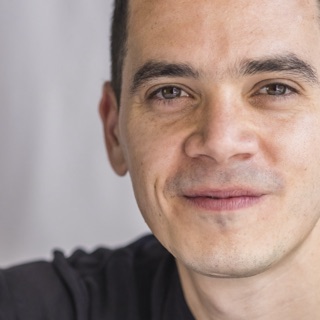
I came to AI through two pivots I paid for myself: networks to data, then data to AI. Now I ship agents into production, and think hard about when not to build them.
2026 —
I joined Pfizer in August 2026 as a Senior AI Manager, in AIA (AI Acceleration), its global analytics arm. The work is marketing analytics for the Chief Marketing Officer’s organization: measurement, experimentation, and the models behind how marketing spend gets judged. I manage two junior analysts, and the team is set to grow.
2025 —
I’m also the technical co-founder of Efeeo, working with CEO Francis Ofungwu on the ontology and observability layer for enterprise AI governance: knowledge graphs on Neo4j, agentic observability, and proof layers that let a company show what its AI actually did. We took it to Web Summit Vancouver in 2026 as an alpha, pre-seed startup.
2025 —
On nights and weekends I build and run Martita, a WhatsApp receptionist for the Mexican small businesses that live on appointments. One codebase serves every tenant. Claude chooses among 21 tools, with no intent router, and a cron heartbeat sends reminders, briefings and follow-ups without anyone messaging first.
I started it in July 2025, made enough of a mess that I threw the codebase away, and started again in December 2025. Two tenants in production and nobody paying yet, which is deliberate: I want to know what breaks with real customers before I charge for it.
2025–26
I moved to Senior AI Engineer at GM Mexico in February 2025 and stayed until August 2026, building agents and RAG architectures: LucIA, a hybrid-search co-pilot for the commercial teams, and a screen-aware agent that writes SOPs while people work. I wrote the corporate Buy-vs-Build framework GM Mexico uses to decide whether an AI capability is worth building at all. LucIA took second place in GM Finance’s global best-project awards for 2025, which put the work in front of GM’s CFO, Paul Jacobson, and his staff.
There was no AI team or strategy when I started, so part of the job was advising leadership at GM Mexico and North America on how to adopt it. When Glean arrived I learned it from scratch and then taught it. Finance was at 95% adoption by the time I left, and most of my effort went into getting people to use it for work that needed it. Increasingly I was the person other teams pulled in when they wanted to build something with AI.
2023
Professional Certificate in Machine Learning and Artificial Intelligence, UC Berkeley Executive Education, finished September 2023. An intensive program, five or six days a week, with a capstone on incentive importance and relevance using SHAP values over real GM data. The second pivot, from data into AI. It finished two months after I’d moved into the data science role.
2020–25
I started at GM on January 2nd, 2020, two months before the pandemic, building analytics over millions of daily OnStar vehicle events. I kept pulling brand managers into analytics conversations that weren’t my job, which is how I became product owner on the marketing side of OnStar: my analysis of how people used the WiFi in their cars fed the strategy that put unlimited data and services across 80% of GM’s portfolio in Mexico.
From July 2023 I was lead data scientist in Finance, on pricing and incentives, with two junior analysts. Competitor pricing intel isn’t public in Mexico, so we bought it from a data provider and built the first ML incentive-optimization engine I know of here: log-log elasticity models wired into the monthly budgeting and forecasting for incentive spend.
2018–19
Master’s in Data Analysis and Visualization (Maestría en Análisis y Visualización de Datos) at Tec de Monterrey, Santa Fe campus in Mexico City, at night and on Saturdays while I kept working at AT&T. I could see the industry moving toward data and wanted to be on that side of it. It’s where I moved from networks to data, and after it I became the data analytics person at AT&T and later at GM.
2017–19
I joined WDNA in April 2017, consulting for AT&T Mexico, after a former manager from Huawei Venezuela called. There I proposed and built Network Insider, observability over saturation across AT&T’s microwave network, which stayed in use after I left.
The first project was a naming convention. AT&T had absorbed Nextel and Iusacell, and three companies’ worth of device names had collided into one mess. I renamed tens of thousands of devices, mostly microwave links, by hand, alone, in maintenance windows.
When that ran out we needed another project to keep our jobs, so I proposed Network Insider: observability over saturation across AT&T’s entire microwave network. I built the Tableau proof of concept, then worked with the design team on the web app, giving them the direction, the raw data, and how to wire it together. The microwave, core and packet-switched teams used it, and it kept getting extended. I was a consultant rather than a PM, though I did the PM work along with the execution, the customer relations, and the design of the maintenance windows.
2013–17
Three years at Huawei, first as an OSS engineer on iManager M2000 and U2000, then on the core network itself, CS and PS, running both from 2016. I was a contractor embedded in Huawei’s teams, handling failure tickets by severity for CANTV, Movilnet, Movistar and Digitel.
Most of the work happened in overnight maintenance windows, upgrading live carrier networks. Major failures were escalated to headquarters in China, with me on site assisting. CANTV was the hardest account: state-owned, strict SLAs, and it expected to be treated as the top-priority customer. I moved to Mexico at the end of 2016.
2013
My first job was an internship in Cisco Venezuela’s lab in Caracas (Cubo Negro), which handled training, customer POCs, and the loaner gear clients tried before they bought. Over six months I built wireless topologies in a sandbox and helped customers provision their routers and switches. I got the spot because I’d studied the CCNA, and finishing it was the last requirement before my degree.